
Recognising and Responding to Signs of Resident Deterioration
Changes in a resident’s health can be subtle at first. A person may seem less alert, eat less than usual, become more unsettled or need extra help with everyday activities. In aged residential care, noticing a change from someone’s usual presentation can help the care team decide when further assessment is needed.
Recognising a concern is a shared responsibility. Care staff often know a resident’s normal routines and behaviour, while registered nurses assess the change, decide on next steps and coordinate the response. A clear process helps observations reach the right person and follow-up actions remain visible.
Looking for Changes From the Resident’s Usual State
Acute deterioration can involve a significant change in a person’s cognitive, behavioural, functional or physical health. Changes in these areas may appear before vital signs change, so observations about how a resident is different from their usual self matter.
Possible changes include:
- New or increased confusion, unusual drowsiness or reduced responsiveness
- A change in mood, behaviour or usual level of engagement
- Reduced mobility, difficulty transferring or needing more help with daily activities
- Eating or drinking less than usual
- New or worsening pain, changes in breathing, or a change in skin appearance
- Not returning to their usual level of health or function after an illness
Share Concerns Early
Anyone who notices a change can help by reporting it promptly to the registered nurse, following the facility’s process. A useful observation describes what has changed, when it began and what has been seen or heard. Where possible, include the resident’s own account and relevant observations from whānau or family.
Care staff do not need to determine the cause before raising a concern. Their observations can help the registered nurse build a clearer picture and decide what assessment is needed.
Assess the Change in Context
A structured assessment helps the registered nurse consider the resident’s current presentation alongside their usual health, relevant history, care plan and any advance care planning or escalation instructions. Observations and vital signs should be assessed and interpreted in line with clinical judgement, the resident’s needs and the facility’s procedures.
Te Tāhū Hauora Health Quality & Safety Commission’s Deterioration Early Warning System (DEWS) was developed for aged residential care. Its tools support early observation, registered nurse assessment and communication, but they are intended to support clinical decision-making — not replace it. Use DEWS where it has been implemented, and follow the local pathway if a concern remains or the resident appears acutely unwell.
Acute Deterioration Decision Support
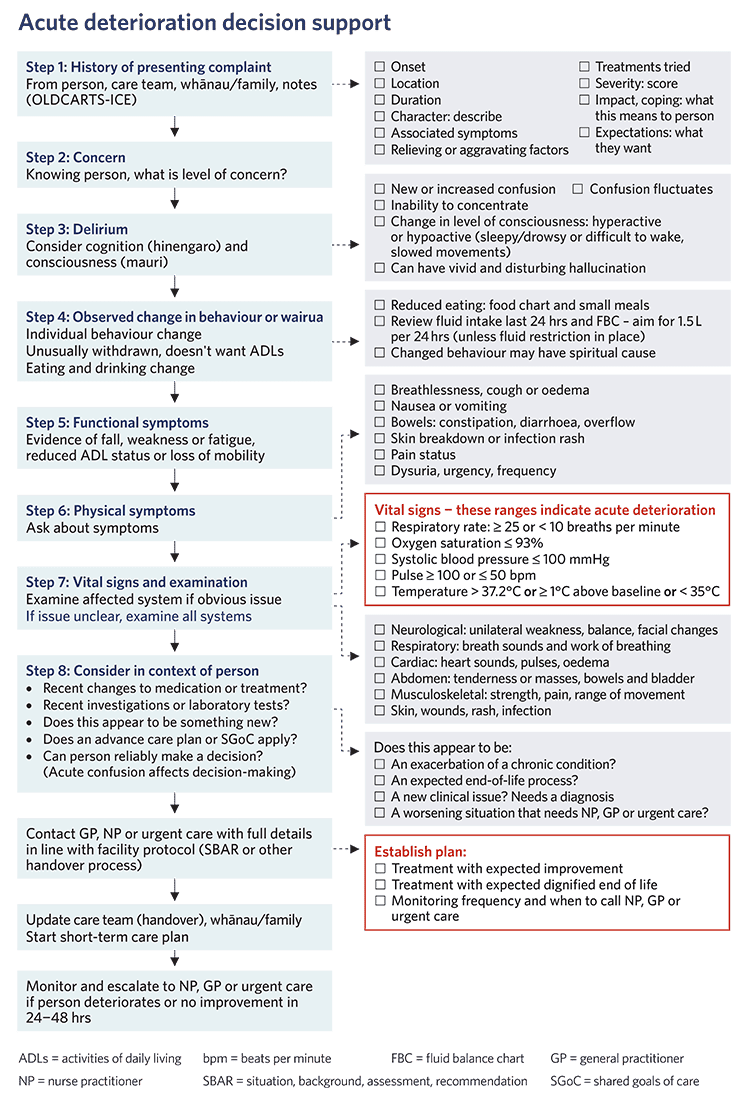
Image: Te Tāhū Hauora Health Quality & Safety Commission. 2023. Frailty care guides | Ngā aratohu maimoa hauwarea. Wellington: Te Tāhū Hauora. Reproduced under Creative Commons licence, type BY-NC-SA 4.0 https://creativecommons.org/licenses/by-nc-sa/4.0.
Communicate Clearly and Escalate Appropriately
When a concern needs to be escalated, clear communication helps the receiving clinician understand what has changed and what support is needed. Use your facility’s agreed handover framework, such as SBAR, and follow its escalation pathway.
Include the information relevant to the situation:
- What has changed from the resident’s usual state
- When the change started and how it has progressed
- Relevant observations and assessment findings
- Actions already taken and the resident’s response
- Relevant background and any agreed escalation instructions
- What advice or further assessment is being requested
The appropriate next step will depend on the resident’s condition and the facility’s procedures. If the situation is urgent, follow the facility’s emergency response process.
Document the Plan and Follow Up
After assessment and escalation, the registered nurse and relevant clinicians can agree on the next steps. The plan should make clear what actions are required, who is responsible, what needs to be monitored and when the situation should be reviewed or escalated again. The timing and thresholds should be set by the responsible clinicians for that resident—not assumed from a general article.
Document the assessment, advice received, agreed actions and subsequent changes in the resident’s record. Make sure the plan is handed over to the staff who need to know. Update the longer-term care plan if the resident’s needs or usual level of function have changed, and close the short-term plan when the episode has been resolved in line with clinical direction.
Include the Resident and Family
The resident should be involved in conversations about their health and care wherever possible. Whānau or family observations may also help staff understand what is unusual for the person. Share updates and discuss changes to the care plan in line with the resident’s preferences, consent and the appropriate decision-making arrangements.
Support a Clear Record of Care
Digital records can help staff document observations, assessments, decisions and follow-up actions in the resident’s record, supporting continuity across shifts. VCare’s care management software includes tools for resident assessments, measurements and observations, clinical records, monitoring and DEWS. These tools support the care team’s workflow alongside clinical judgement and local procedures.
Recognising deterioration depends on people noticing changes, sharing them promptly and following a clear assessment and escalation process. Consistent communication and documentation help the team understand what has happened, what action was agreed and what needs to happen next.